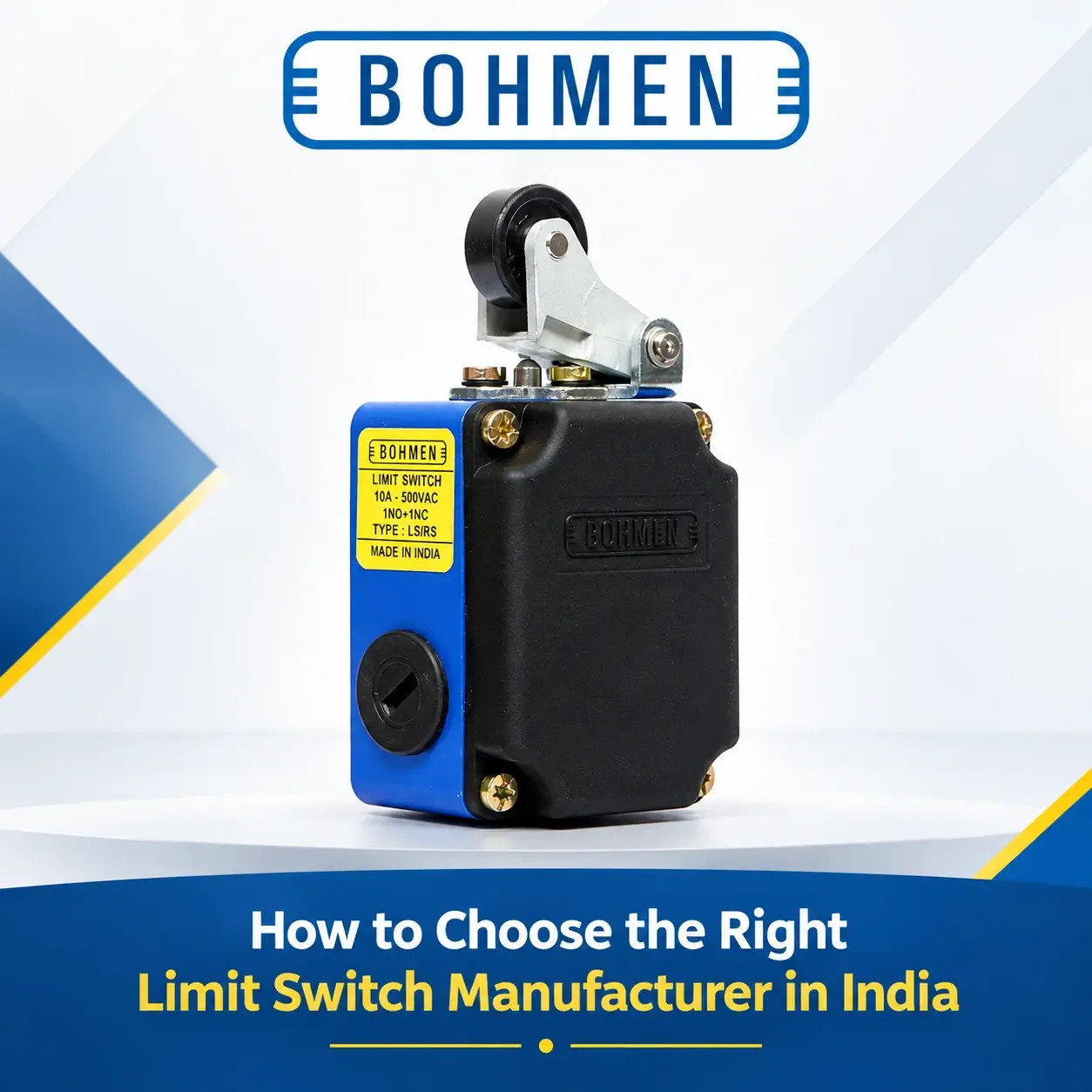
Selecting the right limit switch manufacturer is an important decision for OEMs, machine builders, maintenance teams, panel manufacturers, and industrial automation professionals. A limit switch may be a relatively small component. But literally it can directly affect machine positioning, motion control, interlocking, and equipment operation.
With many manufacturers and suppliers available in India.By selecting the product based only on price can be risky. A certified manufacturer should offer the appropriate product range, consistent quality and suitable protection ratings. Also need to check reliable switching performance, technical support, and availability for your application.
So, what needs to be checked for the best limit switch manufacturer in India?
Here are the key factors to consider before making your decision.
Understand Your Application Before Choosing a Manufacturer
The first step is to understand exactly where and how the limit switch will be used.
Consider:
- What type of machine will use the switch?
- How frequently will the switch operate?
- Is the movement linear or rotary?
- Will it be exposed to dust, moisture, oil, vibration, or impact?
- What voltage and current will the contacts handle?
- What type of actuator is required?
- Is the switch being used for position detection, machine control, or an interlocking function?
A manufacturer with a broad range of industrial limit switches can make it easier to select a suitable configuration instead of forcing you to use a single standard design.
Choose a Manufacturer with Broad Product Portfolio
Different machines have different combinations of limit switches. Depending on your application you may need:
- General-purpose series switches
- Heavy-duty options
- Miniature or compact designs
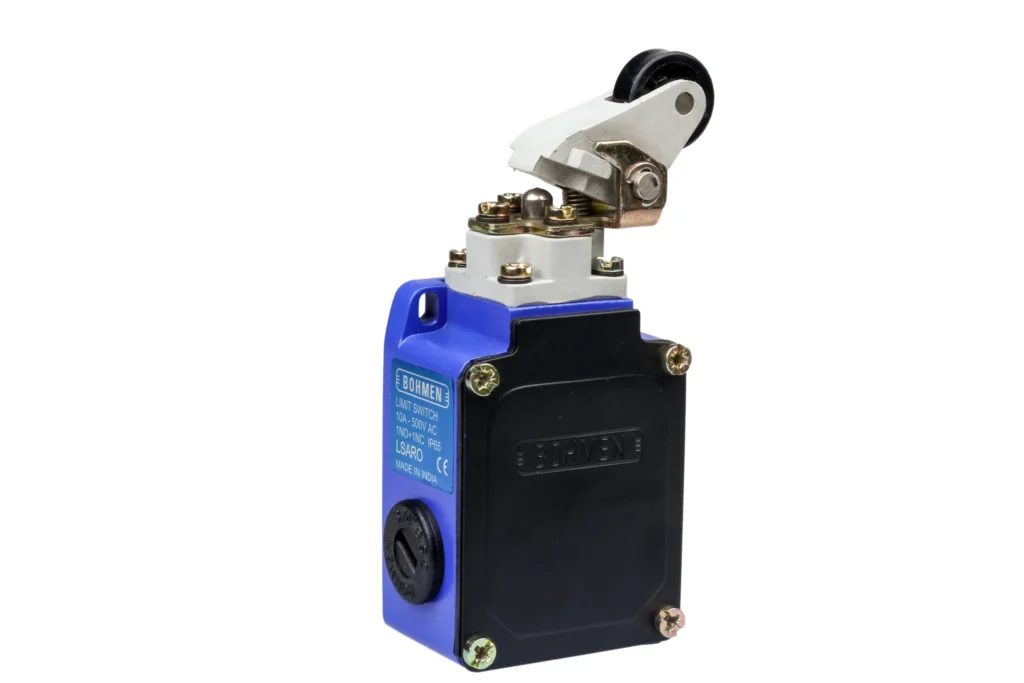
- Roller lever switches
- Plunger-type switches
- Rotary limit switches
- Pull-cord or rope-operated switches
- Different contact configurations
- Different enclosure and protection ratings
Having several series to choose from gives you a lot more flexibility, especially when you are dealing with different machines and operating conditions. Bohmen offers a range that includes GL, PL, ML, BL, and BPS series. Each switch is designed for specific industrial needs.
Look at Real-World Experience, Not Just Years in Business
Experience counts but not just in terms of how long someone’s been around. What really matters is the type of machinery and industries they are serving.
A manufacturer with hands-on experience across different applications will understand practical things like:
- Which actuator works perfect in different situation
- Mechanical alignment challenges
- Contact configurations
- Mounting considerations
- Environmental conditions
- Switching frequency demands
- Replacement and maintenance needs
Limit switches are used across a wide range of industries. These are conveyors, machine tools, elevators, packaging machinery, material handling, cranes, automation systems, textile machines, and general manufacturing. A manufacturer who’s worked across these areas brings real value to the table, especially for OEMs and engineering teams designing new equipment.
Check Construction Quality and Durability
Industrial limit switches live in tough environments. They take mechanical hits, vibrations, dust, moisture, oil, and constant actuation.
So don’t judge a switch by its price tag. Check the manufacturer specs and dig in:
- Actuator design
- Mechanical strength
- Contact arrangement
- Operating life expectancy
- Environmental protection
- Operating temperature range
- Mounting options
Solid construction means fewer premature replacements and fewer unexpected machine stoppages under hard conditions.
Don’t Skip the IP Protection Rating
The environment where the switch will live should directly influence your choice. A switch tucked inside a clean machine enclosure has different needs than one sitting on an outdoor conveyor or a heavy industrial floor unit. Common protection levels are IP65 and IP67, depending on the design and application. These ratings tell you how well the enclosure protects against solid particles and water.
Before committing to a manufacturer, make sure their range actually offers the protection level your installation requires. If dust, water spray, or harsh conditions are part of the picture, choosing a properly rated switch becomes even more critical.
Pick the Right Actuator Type
The actuator is the part that physically contacts and interacts with the moving machine component. The right choice depends completely on how the machine moves.
Here’s a quick rundown:
- Plunger Type — Useful when a moving part directly pushes the actuator.
- Roller Plunger — Workable if the moving part rolls on the actuator.
- Roller Lever — Often used when something approaches the switch from the side.
- Adjustable Lever — Helpful when you need to change the point of actuation.
- Rotary Actuator — Perfect for rotation or shaft driven motion.
Select an actuator that fits the machine’s movement pattern, space available, required operating force and mechanical travel. A good manufacturer should give you enough options to design different machines without compromise.
Get the Electrical Specs Right
It’s easy to focus on mechanical fit and forget about electrical compatibility — but that’s a mistake.
Before buying, verify:
- Rated voltage and current
- AC vs. DC requirements
- Contact configuration
- NO/NC arrangement
- Load type
- Switching frequency
- Electrical life
A switch connected to a PLC input has different needs than one controlling a heavier electrical load. Always compare the manufacturer’s datasheet against your actual circuit requirements — don’t pick a switch just because it looks right physically.
Ask About Quality Control and Testing
If you are purchasing limit switches in large quantities as an OEM, machine manufacturer, or system integrator. Then it’s all about how consistent the performance is across every batch. Even small differences in switching performance can cause problems in production and maintenance.
When evaluating manufacturers, ask about their quality processes:
- Quality management systems
- Incoming material inspections
- Assembly controls
- Electrical and mechanical testing
- Final inspection procedures
- Traceability and batch consistency
A documented quality process gives you far more confidence than marketing promises. For example, Bohmen is ISO 9001:2015 certified and tests all limit switches before shipment.
Think About Customization for OEM Needs
Standard products cover a lot of applications, but OEMs often have specific requirements. These can include:
- Custom actuator configurations
- Unique contact combinations
- Special installation requirements
- Cable entry systems
- Enclosure dimensions
- Electrical configurations
- Space limitations
If you make machines in different configurations. Also collaborating with a manufacturer that enables application-specific customization.Then that can help with procurement, and help you standardize across product lines.” Just make sure to look into the specific customization available for the series you are interested in.
Don’t Overlook Technical Support
Technical support becomes a big deal when you’re selecting a switch for new equipment or replacing an existing one. A reliable manufacturer or supplier should be able to guide you on:
- Which series fits your application
- Which actuator is appropriate
- Required contact configuration
- Necessary IP rating
- Mounting methods
- Whether a specific model can replace an existing switch
Good technical support reduces the risk of going down the wrong path — and that’s worth its weight in gold when you’re dealing with production lines.
Consider Availability and Lead Times
In industrial machinery, availability can be just as important as the technical specs. When a limit switch fails, it can bring part of a machine — or an entire production process — to a halt. If the replacement is hard to source, even a cheap component can end up costing a lot through downtime.
When comparing manufacturers, factor in:
- Local availability
- Standard product stock
- Replacement availability
- Lead times
- Distributor network reach
- Technical support accessibility
- Spare-part availability
For OEMs, it can also make sense to standardize commonly used limit switch series across multiple machines — as long as it’s technically appropriate. That way, you’re always stocked and ready when a replacement is needed.
What is the difference between a Limit Switch Manufacturer and a Supplier?
When searching for a limit switch manufacturer in India, buyers may come across both manufacturers and distributors.
A distributor can be useful when you need a particular brand or product. However, purchasing product directly from manufacturer can provide additional benefits such as:
- Technical support
- Product customization
- Application-specific recommendations
- OEM support
- Multiple product series
- Long-term product availability
It really depends on your project requirements.But you should always verify whether the company is manufacturing the products or only distributing them.
Why Product Range Matters When Selecting a Manufacturer?
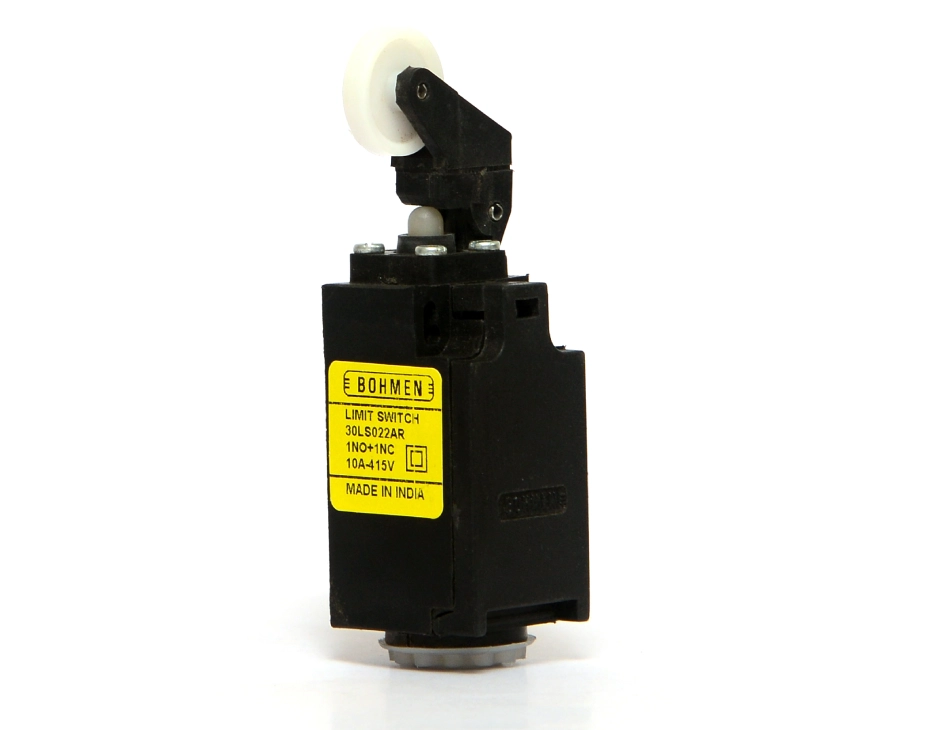
One of the biggest advantages of working with an established industrial limit switch manufacturer is the customer’s access to multiple product configurations. For example, an application may start with a standard limit switch but later require a more compact design, a different actuator or higher environmental protection.
Having multiple series from the same manufacturer can simplify:
- Product choice
- Procurement
- Replacement
- Maintenance
- Standardization of machines
- Technical support
Bohmen India currently has several series of limit switches in its product portfolio.Also provide protection levels up to IP67, depending on the series.
How to Select the Right Limit Switch Manufacturer in India: Quick Checklist?
Before finalizing a manufacturer, check these points:
| Selection Factor | What to Check |
|---|---|
| Product Range | Multiple switch types and configurations |
| Application Experience | Relevant industrial applications |
| Actuator Options | Plunger, roller, lever, rotary, etc. |
| Electrical Specifications | Suitable for the installation environment |
| Construction | Appropriate material and mechanical strength |
| Quality | Inspection and testing procedures |
| Certifications | Relevant quality and product standards |
| Customization | OEM/application-specific requirements |
| Technical Support | Selection and application assistance |
| Availability | Lead time and replacement availability |
| Long-term Support | Product continuity and service |
Why Bohmen India?
Bohmen India offers a variety of industrial limit switches for industrial buyers. They are one of the leading limit switch manufacturers in India and designed each switch for different applications and operating environments. The company’s current product portfolio includes GL, PL, ML, BL and BPS series. These series cover different industrial requirements and configurations. Visit the website to get product information, technical specifications and application guidance for selecting the right series.
If you already know your application requirements. The best next step is to compare the available limit switch series. Then choose the configuration that matches your machine’s mechanical, electrical and environmental requirements.
Conclusion
Choosing the right limit switch manufacturer in India should involve more than comparing product prices. Check out the manufacturer’s product range, industrial experience and construction quality. Also check actuator options, electrical specifications, IP protection, quality-control procedures, customization capability, technical support and product availability.
Most important of all, begin with your application requirements. Then choose a manufacturer that can supply the proper switch configuration. A properly chosen limit switch provides dependable position sensing and machine control. Also helps to reduce unnecessary maintenance and replacement.
If you are looking for industrial limit switch options. Then check out the limit switch series and specifications available before making your final selection.