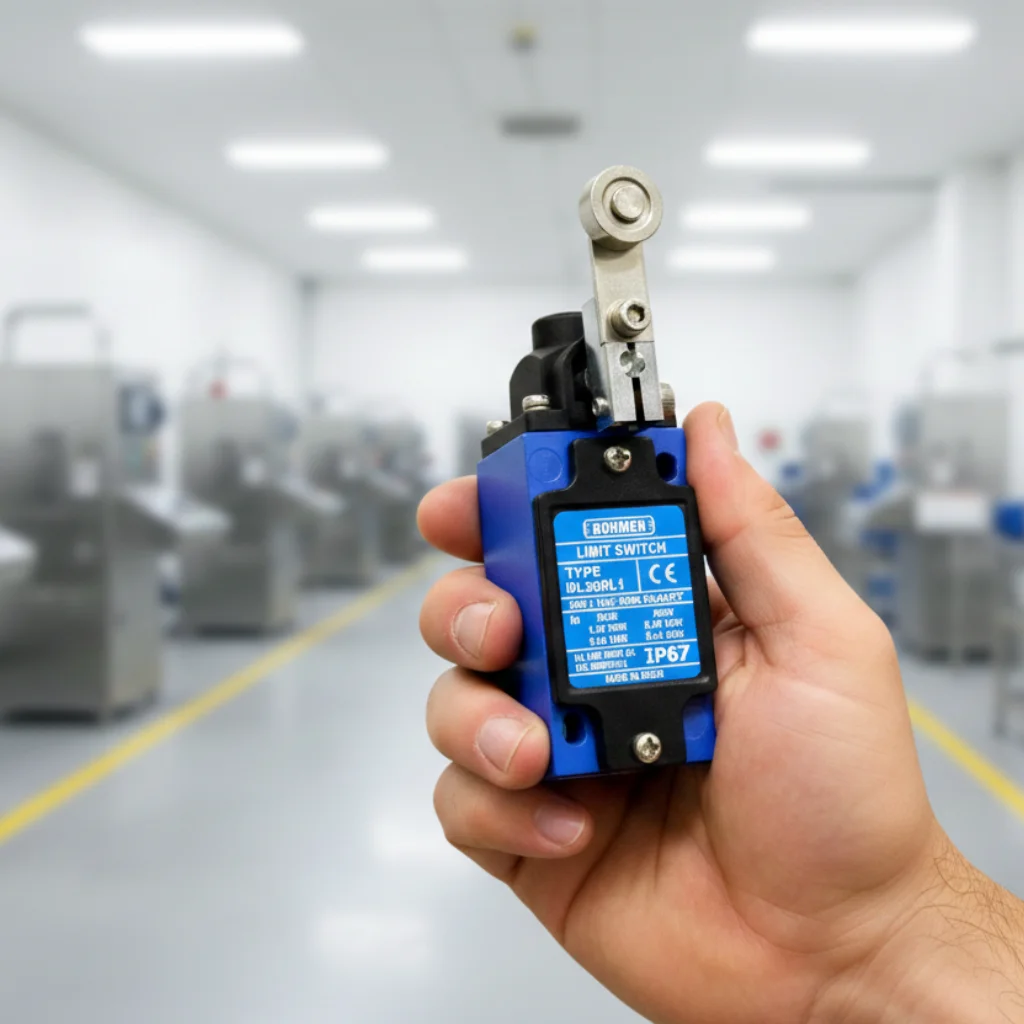
Roller limit switch is a small component but they do one of the most important jobs in the factory. It controls machines when to stop, when to reverse, and when to move on to the next step. If you pick the wrong switch for your industry? Then you are looking at downtime, repair bills, and a whole lot of frustration. So whether you are a seasoned maintenance engineer or someone just getting into industrial equipment, this guide is going to walk you through everything you need to know about picking the right roller limit switch. This is not fluff, just practical stuff that actually matters.
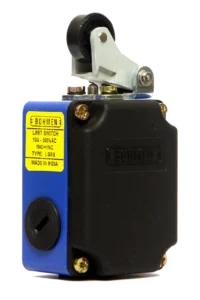
What Is a Roller Limit Switch?
Here is the simplest way to think about it. A roller limit switch is basically a position detector. Something moves, hits a roller, and the switch flips. Also closing or opening a circuit so your machine knows what to do next. That is literally it. Nothing complicated, just solid mechanical and electrical work packed into one compact device.
Roller limit switches have been used in industrial machinery for many years. They are one of those small components that often go unnoticed until something goes wrong. If you have ever visited a factory in India, whether it is a packaging plant, a crane yard, or a CNC machining shop, you have probably seen machines using roller limit switches for position and movement detection.
Bohmen India has been manufacturing industrial limit switch for more than 40 years. Their switches are used in most Indian industries. This Due to their reliable performance, durable construction, and consistent product quality.
How Does a Roller Limit Switch Work?
Alright, so how does it actually function? Let me break it down in plain terms.
The working principle of a roller limit switch is simple. A moving part of the machine comes into contact with the roller and causes it to rotate. The rotation moves an internal lever, which activates the contacts inside the switch.Once the contacts change state, the machine receives the required signal. This may tell the machine to stop, reverse, or continue to the next stage of the operation.
The reason the roller design is so effective is because of how it distributes force. When something pushes against a roller, the load spreads out across the surface instead of concentrating on one tiny point. That means less wear, less shock, and a lot more life out of the switch. You will notice this difference especially in high-cycle applications where the switch is getting hit hundreds of times a day.
Key Components of a Roller Limit Switch
Before you start purchasing, you need to know what you are looking at when you inspect one of these switches. Here are the main parts:
Roller Lever
This is the front part that physically touches the moving object. Good rollers are machined smooth so they spin easily and do not grab or stick.
Actuator Inside the Housing
Once the roller turns, it pushes this internal lever mechanism, which then physically moves the electrical contacts
Electrical Contacts
This is where the actual switching happens. You will commonly see 1NO + 1NC (that is one normally open and one normally closed contact). Some models go up to 2NO + 2NC if your circuit needs more flexibility.
Housing / Enclosure
The body that holds everything together. On the better switches, you are looking at die-cast Aluminium or cast iron. These materials survive vibration and impacts way better than plastic ones, which you will find on cheaper switches.
Terminals
The little connection points where your wires attach. Quality terminals are tight and secure, so you do not get loose connections after a few months of vibration.
Types of Roller Limit Switches
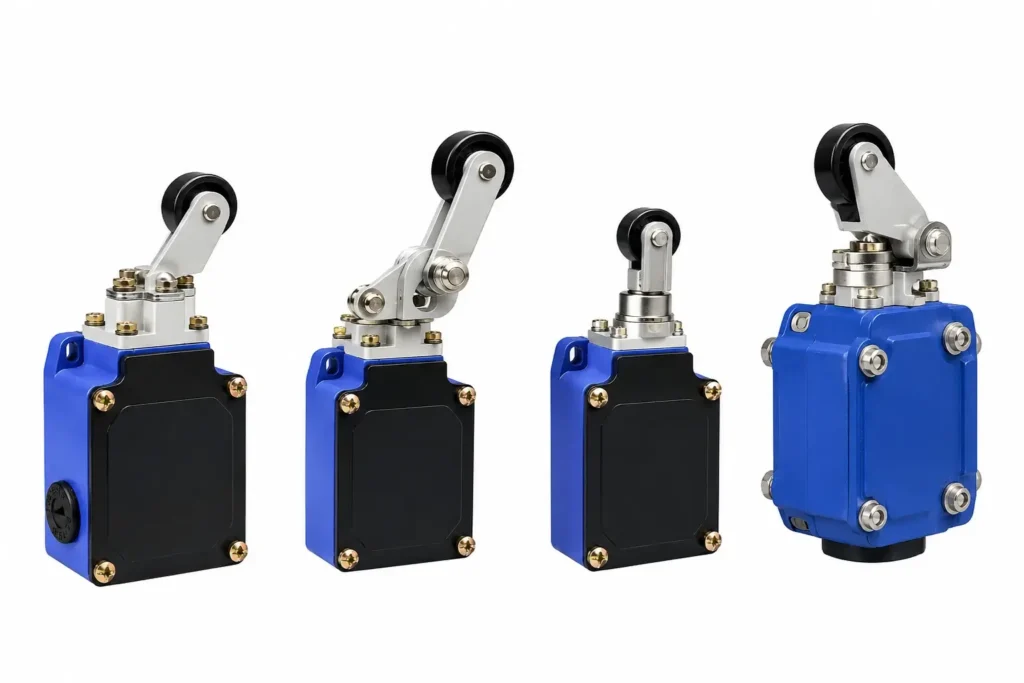
Not every roller limit switch is built the same, and picking the wrong type for your application is one of the easiest mistakes to make. Here is a rundown of what is out there:
Standard Roller Lever
This is the one everybody knows. Fixed roller, straightforward design, gets the job done in most general applications. If your machine has a predictable contact path, this is probably all you need.
Adjustable Roller Lever
This one lets you change the angle and position of the roller. Sounds simple, but it is a game-changer when you are trying to get that perfect alignment on a tricky installation. Worth the extra cost if your setup demands precision.
Roller Plunger
Think of this as a cross between a roller switch and a plunger switch. Compact body, but still with the roller action on top. Great when space is tight and you still want the benefits of a rolling contact.
Heavy-Duty Roller Limit Switch
If your environment is rough, constant vibration, extreme temperatures and nonstop operation,then this is the one perfect solution to your requirement. Bohmen India makes these specifically for tough Indian factory conditions, where a cheap switch might give up after a few months.
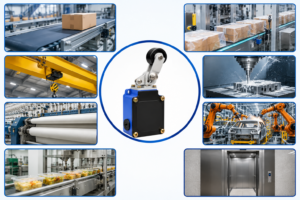
Where Are Roller Limit Switches Used?
Honestly, the list is almost longer than the industries that do not use them. But here are the big ones where roller limit switches really prove their worth:
Conveyor Systems
It is used in conveyor systems to prevent belt misalignment, and make sure everything moves at the right pace. Without it, you are dealing with jams and wasted products.
Packaging Machinery
These switches make sure the sealing, cutting, and labeling happen at exactly the right moment. Even a slight mistiming can mess up an entire system.
Cranes and Hoists
This might be the most critical application. Roller limit switches prevent over-travel, which in crane terms means preventing a catastrophic accident. They keep heavy lifting operations safe and controlled.
CNC Machines
It detects the exact position of the workpiece, which reduces errors and keeps the automated process running.
Textile Machinery
Fabric rollers and moving components in textile mills depend on these switches for consistent movement. Inconsistent motion means inconsistent quality, and nobody wants that.
Automotive Manufacturing
Robotic arms, welding stations, and transfer lines all rely on roller limit switches for accurate movement and position detection. It helps to coordinate these operations by signaling when a machine has reached a specific position. Also prevent collisions, incorrect movements, and production errors.
Food Processing
This type of environment is hard for equipment. Constant washing, moisture, temperature changes may be an issue. But properly rated roller limit switches hold up well here.
Elevators and Material Lifts
Floor-level stopping, door operations, safety interlock all are handled by these switches.
Key Factors to Consider Before Choosing a Roller Limit Switch
Do not just grab the first switch you see on a supplier’s shelf. There are real factors that should drive your decision, and here they are:
Operating Force
How hard does the moving part push against the roller? If the force is too light, the switch might not trigger reliably. Too heavy, and you risk damaging the mechanism or getting false triggers. Match the switch to what your machine actually delivers.
Actuator Type
Already covered above, but this really is one of the first decisions you need to make. Roller lever for general use, adjustable for precision work, roller plunger for tight spaces, and heavy-duty for rough conditions.
Contact Configuration
How many circuits do you need to control? 1NO + 1NC works for most basic jobs, but if your system needs more complexity like running a warning light and a motor simultaneously. Then you might need 2NO + 2NC.
Electrical Rating
This is non-negotiable. Check the voltage and current your switch needs to operate. Most industrial ones are rated at 250V AC or 24V DC, with currents from 5A to 10A. But always double-check against your actual system specs before purchasing.
Protection / IP Rating
The IP rating tells you how well the switch resists dust and water. Outdoor cranes and food processing plants need a much higher IP rating than a clean CNC room.
Mechanical Life
Look for switches rated for millions of cycles if your machine runs multiple shifts. A switch rated for a few hundred thousand cycles might sound fine on paper, but in reality it might only last a year or two under heavy use.
Operating Environment
Temperature range, chemical exposure, humidity and vibration may affect your performance and service life of the machine. A switch that performs well at room temperature might fail within weeks on a steel shop floor. Good manufacturers like Bohmen India understand it very well and design their switches that perform in these conditions. That’s why so many Indian industries trust them.
Roller Limit Switch vs Plunger Limit Switch
This is one of those comparisons that comes up again and again, so let us sort it out once and for all.
A plunger limit switch uses a direct push mechanism. Something hits the plunger straight on, and the contacts flip. It is compact and works fine when space is at a premium and the contact direction is fixed. But here the main problem is that straight-line contact creates a lot of friction, which means more wear over time. You will find yourself replacing plunger switches more often than you would like to admit.
A roller limit switch uses a rolling motion instead. The roller turns rather than getting pushed in, which means the force is spread out and there is less friction. It also handles contact from slightly off-angle without any issues.This is something plunger switches really struggle with. The only trade-off is size; roller switches tend to be a bit larger.
If you have the space and you want something that lasts longer with smoother operation, the roller switch is the best choice. If you are working in a super tight spot with a fixed contact direction, then the plunger switch will do the job.
Roller Limit Switch vs Rotary Limit Switch
People mix these up more than you would think, and to be fair, they both deal with position detection. But they solve completely different problems. A roller limit switch detects linear — straight-line — movement. Something moves forward, hits the roller, and the switch reacts. Conveyor stops, door interlocks, stroke limits for all these linear applications where a roller switch is the right tool.
A rotary limit switch detects angular or rotational movement. It uses a cam system that triggers contacts at specific angles as something rotates. You will find these on turning tables, valve controllers, and anywhere something spins and you need to stop it at a specific position. Trying to use a rotary switch for a linear application or vice versa.Simply will not work. So figure out what kind of movement you are dealing with first.Then pick the switch that matches.
Common Installation Mistakes to Avoid
Here is where things go wrong more often than you might expect. Even the best roller limit switch in the world will underperform if it is not installed correctly. Let us go through the usual suspects:
Wrong Mounting Position
If the switch is not aligned properly, the roller either never gets triggered or gets hit at a weird angle. This leads to missed activation and random machine behavior. Take the time to align it properly during installation.
Incorrect Wiring
It sounds basic, but wrong wiring can not only damage the switch but also the entire control system. Always follow the manufacturer’s wiring diagram, and do not guess.
Ignoring the Environment
Putting a standard-rated switch in a dusty, wet, or high-vibration area is just asking for trouble. Match the switch’s protection rating to what you are actually dealing with on the floor.
Over-Tightening Mounting Bolts
It happens more than you think. Too much torque can crack the housing or throw the actuator out of alignment. Stick to the torque specs in the manual.
Never Checking Them
Even the toughest switches need occasional inspection. Look for wear, dust buildup, loose wiring, and any mechanical damage. A five-minute check every few months can save you from an unexpected shutdown that costs hours of production time.
Why Choose Bohmen India Roller Limit Switches?
You can find roller limit switches from a lot of manufacturers, and honestly, some of them are cheap enough to be tempting. But here is why a lot of Indian industries keep coming back to Bohmen India. First, experience. Over 40 years in the game is not something you stumble into by accident. That kind of history means they have seen every kind of industrial condition, fixed every problem, and refined their designs based on real-world feedback.
The build quality is noticeable from the moment you pick one up. Die-cast Aluminium and cast iron housings, solid contacts, and designs that actually account for the kinds of rough conditions Indian factories throw at their equipment. If you have ever replaced a flimsy plastic-bodied switch every few months because it cracked from vibration, you will understand immediately why the build quality of a Bohmen switch matters.
They manufacture close to 5 lakh products annually and hold ISO9001:2015 certification. Every switch goes through strict testing before it ships. They also have CE certification, which means the products meet international quality standards. But here is what really sets them apart from others. Their technical team actually takes the time to understand your application before recommending a product. Their after sales service also continues even after the order is delivered. Fast delivery across India and ready stock means you can get the required components without any delay.